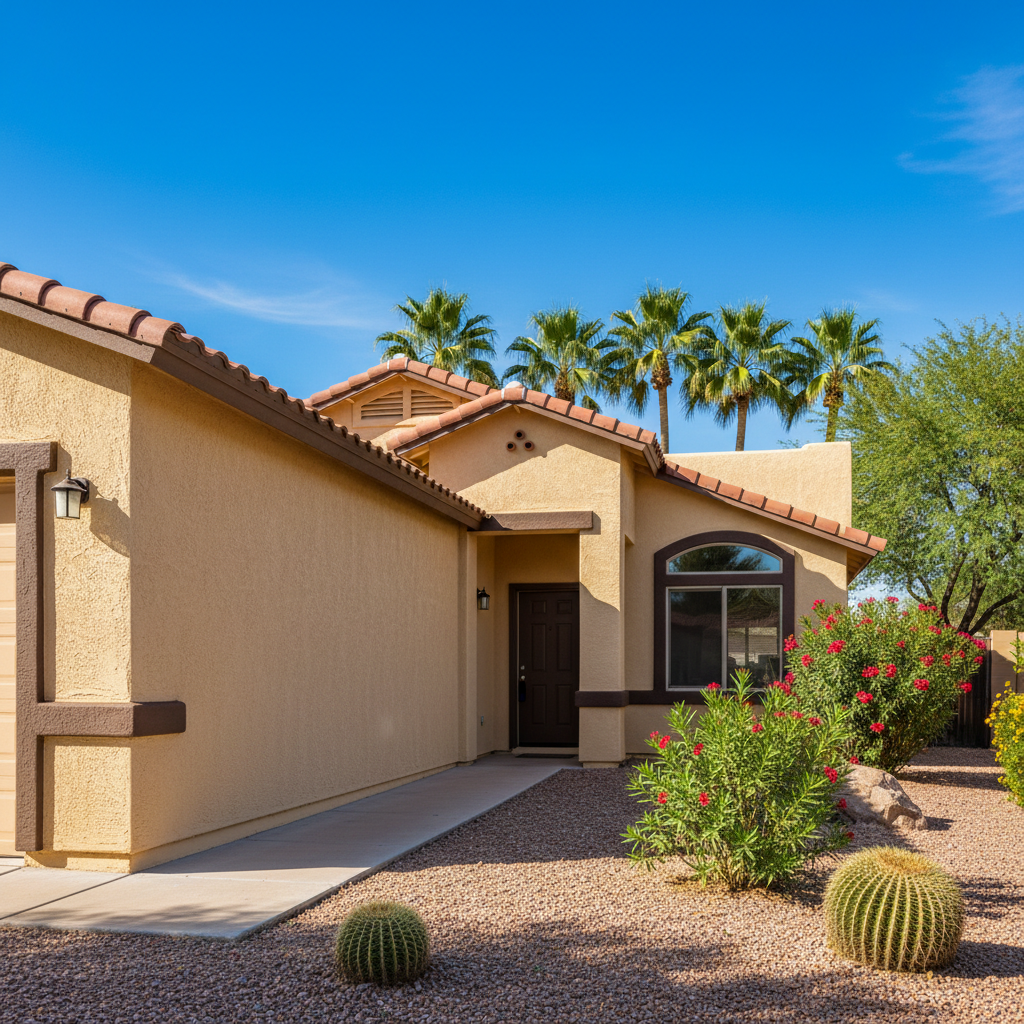
Alright, let's talk stucco painting. I've seen a lot of homes around Yuma, from the older places in the Foothills to the newer builds out by the river, and when it comes to painting stucco, folks often make the same few mistakes. These aren't just little oopsies; they can cost you big money, time, and a whole lot of frustration down the line. You don't want to regret your paint job a year or two after it's done, do you?
Skipping Proper Surface Prep (It's More Than Just Washing)
This is probably the biggest one. People think, "Oh, I'll just power wash it and slap some paint on." Nope, that's not how stucco works, especially not here in Yuma where we get that fine desert dust and sometimes even a little algae if you've got a shady spot or a leaky hose. You can't just paint over dirt, chalky old paint, or cracks. The new paint won't stick right, and you'll see it peeling or flaking off way too soon.
Proper prep means a thorough cleaning, yes, but it also means inspecting for and repairing any cracks, holes, or damaged stucco. If your stucco is chalky, meaning when you run your hand over it, you get a powdery residue, you absolutely need a good quality primer. This primer seals that chalky surface and gives the new paint something solid to bond to. Skimp on this, and you're just throwing money away on paint.
Choosing the Wrong Type of Paint
Not all paint is created equal, especially for stucco in our climate. You can't just grab any old exterior house paint off the shelf. Stucco is a porous material; it needs to breathe. If you use a paint that's too thick or not designed for masonry, you're asking for trouble. We're talking about moisture getting trapped behind the paint, leading to bubbling, peeling, and even stucco deterioration over time. Plus, our intense Yuma sun will just eat through cheap paint in a couple of years, leaving it faded and chalky again.
You need a high-quality acrylic elastomeric or 100% acrylic latex paint specifically formulated for stucco or masonry. These paints are flexible, allowing the stucco to expand and contract with our crazy temperature swings without cracking the paint. They also offer better breathability and UV resistance. It's an investment, sure, but it pays off in longevity and protection for your home.
Ignoring Existing Moisture Issues
This goes hand-in-hand with prep, but it's so critical it deserves its own mention. Before you even think about painting, you've got to address any existing moisture problems. I've seen countless jobs where someone paints over a leaky window, a faulty sprinkler hitting the wall, or a roof issue, and guess what? The paint job fails right there. The moisture will push its way through, causing stains, peeling, or worse, mold behind the stucco.
Walk around your house. Look for water stains, areas where the stucco looks darker, or places where the paint is already failing in a specific pattern. Fix those leaks, adjust those sprinklers, and make sure your gutters are doing their job. Painting over a moisture problem is like putting a band-aid on a broken leg; it won't fix the underlying issue, and it'll just make the paint job look terrible.
Hiring the Cheapest Bid (The "Fly-by-Night" Crew)
Look, I get it. Everyone wants to save a buck. But when it comes to stucco painting, the cheapest bid is almost always a red flag. These are often the guys who cut corners on prep, use cheap paint, or don't have the experience to do the job right in our Yuma conditions. They might not be licensed, insured, or even around next year if you have a problem.
When you're getting quotes, ask questions. What kind of paint do they use? What's their prep process? Do they repair cracks? How long have they been doing stucco work in Yuma? Ask for references and check them. A reputable company, like Yuma Stucco & Plastering, will be transparent about their process and materials. We're here for the long haul, and we stand by our work. Don't let a low price tempt you into a bad job that you'll just have to pay to fix again later.
Not Understanding the Scope of Work
Make sure you and your contractor are on the same page about exactly what's included. Does the quote include power washing? Crack repair? Priming? How many coats of paint? What about trim, doors, and other accent pieces? Are they going to protect your landscaping and windows? Get it all in writing.
I've seen homeowners assume certain things were included, only to find out they were extra, or not part of the standard service. This leads to arguments, delays, and often a less-than-satisfactory result. A good contract protects both you and the contractor, ensuring everyone knows what to expect from start to finish.
Getting your stucco painted can really refresh your home's curb appeal and protect it for years, but only if it's done right. Avoid these common mistakes, and you'll be much happier with the outcome.